Our Walnut Tree Varieties
Chandler Walnut Tree
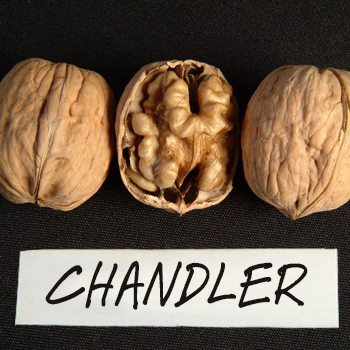
Chandler is our top selling walnut seedling variety. It is known for its superior productivity. Chandler nuts are large with excellent quality, light colored oval shaped kernels, nuts have a thin shell. It leafs and blooms late, so it is more resistant to frost than other varieties. Franquette is recommended as pollinizer.
DETAILS
Fernor Walnut Tree
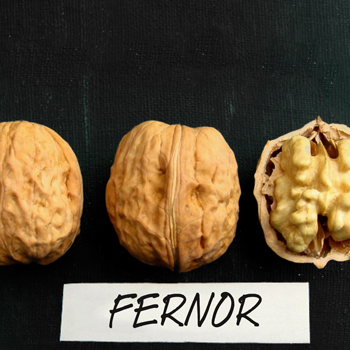
Fernor is a late leafing, highly productive French variety which is blight tolerant. It is often recommended for cold climates that are not suitable to grow Chandler. Fernor is highly productive and produces large fruits with excellent quality and flavor. Fernette is recommended as pollinizer.
DETAILS
Lara Walnut Tree
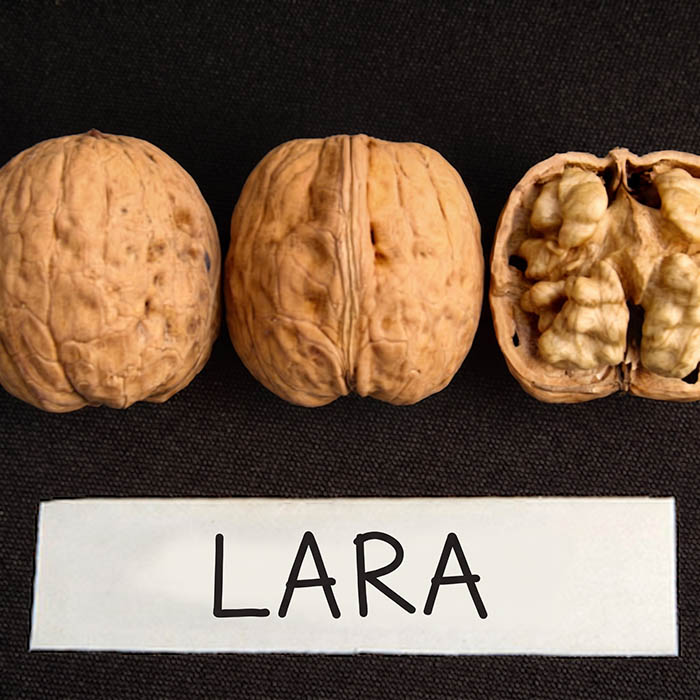
Lara is a French lateral bearing variety that produces some of the largest in-shell walnuts available, 32-38 mm and 10-13 grams, with a thin shell and a fairly light kernel. It leafs out later than Chandler and is harvested early. Lara is the strongest choice where the market pays a premium for large calibre in-shell or fresh walnuts. Franquette or Fernette are recommended as pollenizers.
DETAILS
Howard Walnut Tree
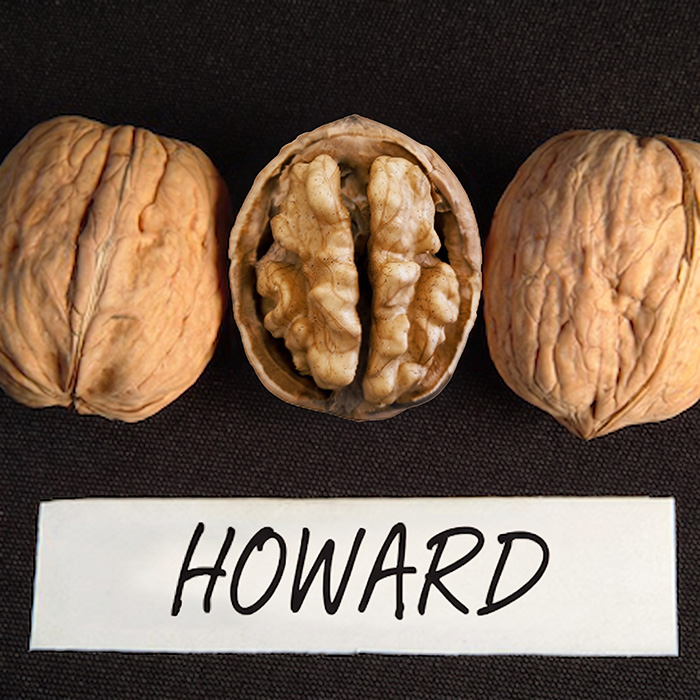
Howard is Chandler's sister variety from the same University of California cross, and one of the most widely planted commercial varieties in California. It is lateral bearing and produces a larger, heavier nut than Chandler in a strong, very well sealed shell, and it is harvested about ten days earlier. Growers often plant Howard as an early block alongside Chandler to spread the harvest workload. Franquette is recommended as pollenizer.
DETAILS
Tulare Walnut Tree
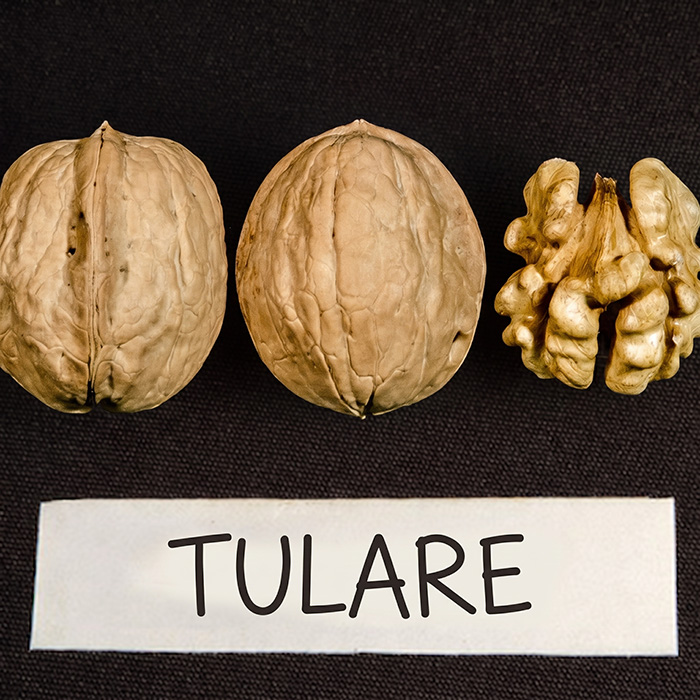
Tulare is a University of California variety and the second most planted walnut in California after Chandler. It is strongly lateral bearing and produces a very large, nearly round nut of 13.3-14.1 grams with a heavy, well filled kernel at around 53% of the nut. It is harvested about ten days before Chandler, and its own male and female flowering overlap well enough that it is often planted with few or no pollenizer trees.
DETAILS
Robert Livermore Walnut Tree
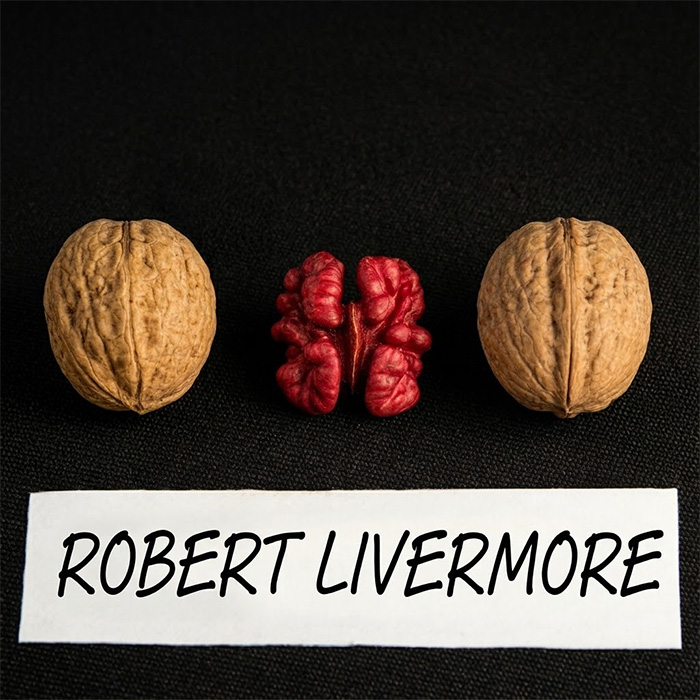
Robert Livermore is the red walnut. It is a University of California variety and the one commercial walnut cultivar whose kernel skin is naturally red to purple instead of the usual light tan. The kernel underneath is a normal, well filled, good quality walnut kernel at 48-50% of the nut, and the tree is a familiar lateral bearing Chandler-like tree harvested about ten days earlier. Its yield is classified as moderate rather than strong, so it is a variety for specialty and premium markets where the kernel is visible, not for maximum tonnage.
DETAILS
Franquette Walnut Tree
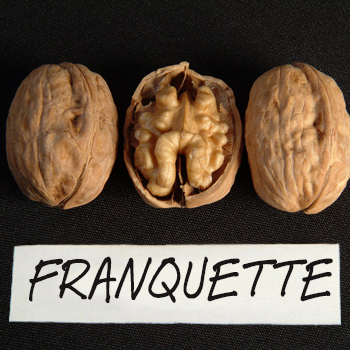
Franquette is a late leafing variety and it is very resistant to frost. It produces thin shelled high quality nuts nuts with good taste . Franquette offers fair productivity and it is used as a pollenizer for Chandler.
Fernette Walnut Tree
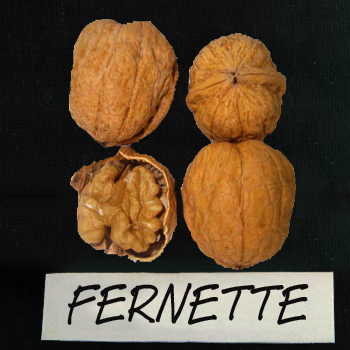
Fernette is a variety with similar characteristics to Fernor. Its fruits are large and tasty. Fernette offers fair productivity and used as a pollenizer for Fernor.
Choosing a Variety
Choosing the right walnut variety is one of the most important decisions for growers. Your profit and satisfaction from your orchard depends on this. Therefore growers should pay attention to this subject. There are several important considerations when choosing a walnut variety for your new orchard:
Climate: Climate of your country and land's location is important in choosing your walnut variety. If your land is in a cold region, you should consider choosing a late leafing variety. Late leafing varieties don't get affected by late spring frost or diseases caused by heavy rains like walnut blight.
Yield: Yield is the amount of walnuts each tree produces. Higher yield means you will collect more walnuts from your tree. This determines the profit you will make from your orchard. Several factors affect yield:
- Lateral bud fruitfulness: Some varieties bear fruits on the tips of the branches and some varieties bear fruits on several lateral (side) points of branches. Therefore, lateral bearing varieties offer higher yields.
- Precociousness: This refers to how early the variety starts yielding walnuts. Some varieties start producing walnuts at 4th year, some varieties start as late as 8th year. The sooner you start collecting walnuts from your trees, earlier you start earning from your investment.
Nut quality: You may collect great amounts of walnuts from your trees. But what will be the price for them? Higher quality nuts will sell for higher prices. Here are the factors that affect nut quality:
- Kernel color: Walnuts with lighter kernel color will sell for higher prices. It is an important element in determining the walnut price.
- Nut size: The larger the nuts, the better.
- Shell characteristics: Walnuts that are easy to remove from the shell sell for higher prices. However, the shell should be strong enough to keep diseases and worms out.
Pollenization: Most walnut varieties require a second variety in order to pollenize and provide better yield. Therefore planting the varieties with the right pollenizer is very important. As a general rule of thumb, for every 10 seedlings of the main variety, you should plant 1 pollenizer variety seedling. Example: If you are planning to plant 10.000 Chandler seedlings in your orchard, you should plant 1.000 Franquette seedlings to pollenize them.
Waltree's RecommendationAt Waltree Nursery we have grown many different varieties since 1992. We experimented with varieties like Hartley, Pedro, Fernor, Midland, Payne, Chandler, Serr and Ronde. After long years of experimenting and measurement we have seen that two varieties are the best among them: Chandler and Fernor. In 2008 we decided to focus on those two varieties and their pollenizers. Today we only sell these most productive and reliable walnut seedling varieties to ensure customer satisfaction. If you are unsure whether Chandler or Fernor would be better for your land, please contact us. We guide our clients in choosing the best variety for their land.